
 By
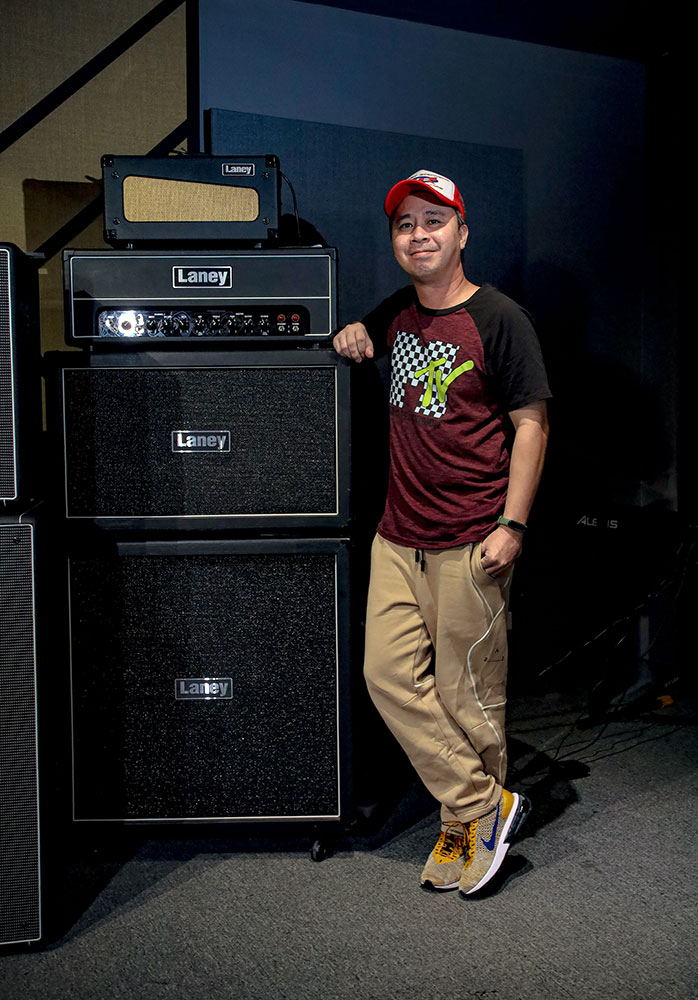
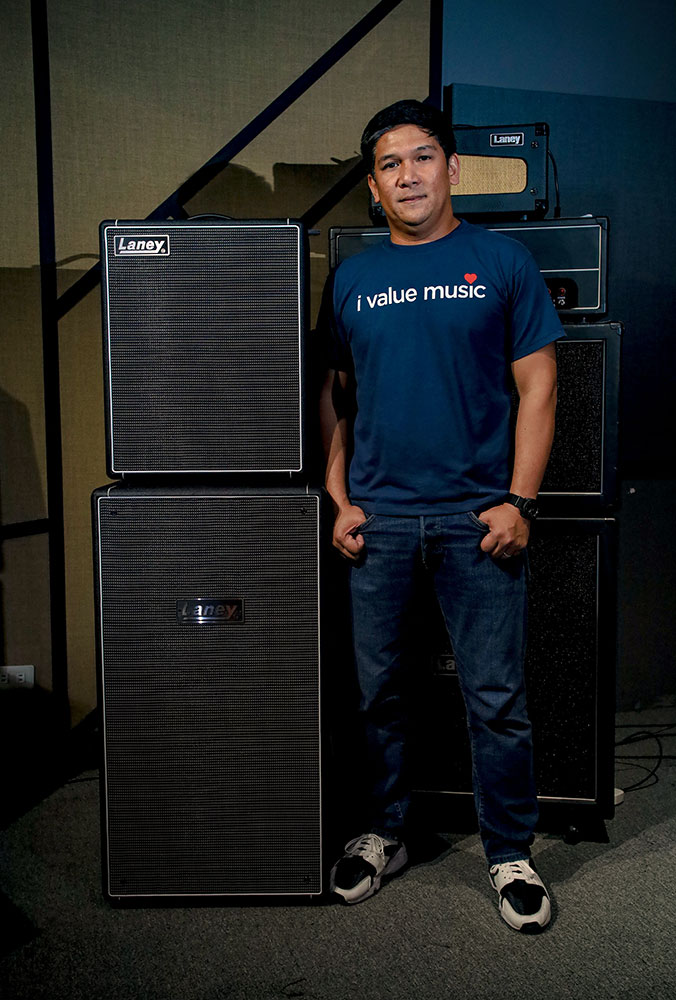
By NOTE: I did this interview early last year during the renewal of Rivermaya’s partnership with JB Music. Due to the pandemic, I had not seen them in person for years, so it was good to finally catch up with them. In lieu of the reunion that happened last February 17, I decided to publish this unreleased interview that I did with the existing members of Rivermaya: Mark Escueta, Mike Elgar, and Nathan Azarcon.
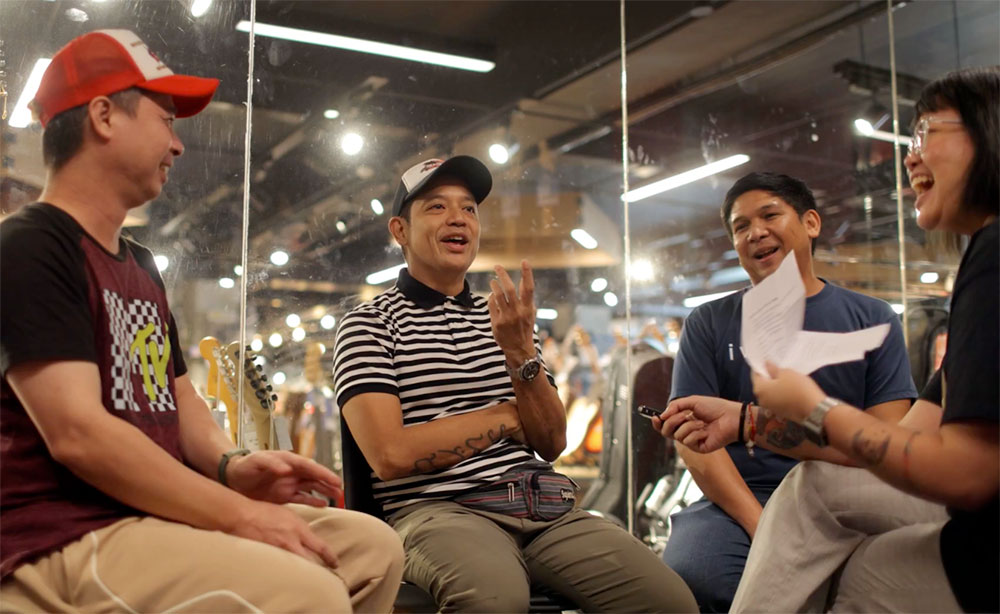
Chatting with Rivermaya is like catching up with old friends who have been where you have been and, in some ways, have experienced what you have gone through just by thinking of the extensively and sympathetic music that they’ve created over the years. They’ve been in the ringer in terms of personal and professional changes, and they’ve got the scars to prove it. But the thing is, drummer Mark Escueta, guitarist Mike Elgar, and bassist Nathan Azarcon welcome these changes with open arms. “Change is exciting,” says Mark. “It’s the only permanent thing in the world,” says Nathan. “It’s not always okay. Of course, it still affects us anytime there are huge changes in the band, but we are always focused on what to do next. We’re lucky, and with all of our hard work, we get by. We’re also confident that we can keep creating and perform good music, so why stop?” says Mike. After several unsuccessful attempts to find a lead vocalist, the band has opted to continue performing as a trio. In any case, as the adage goes, do not repair what is not broken.
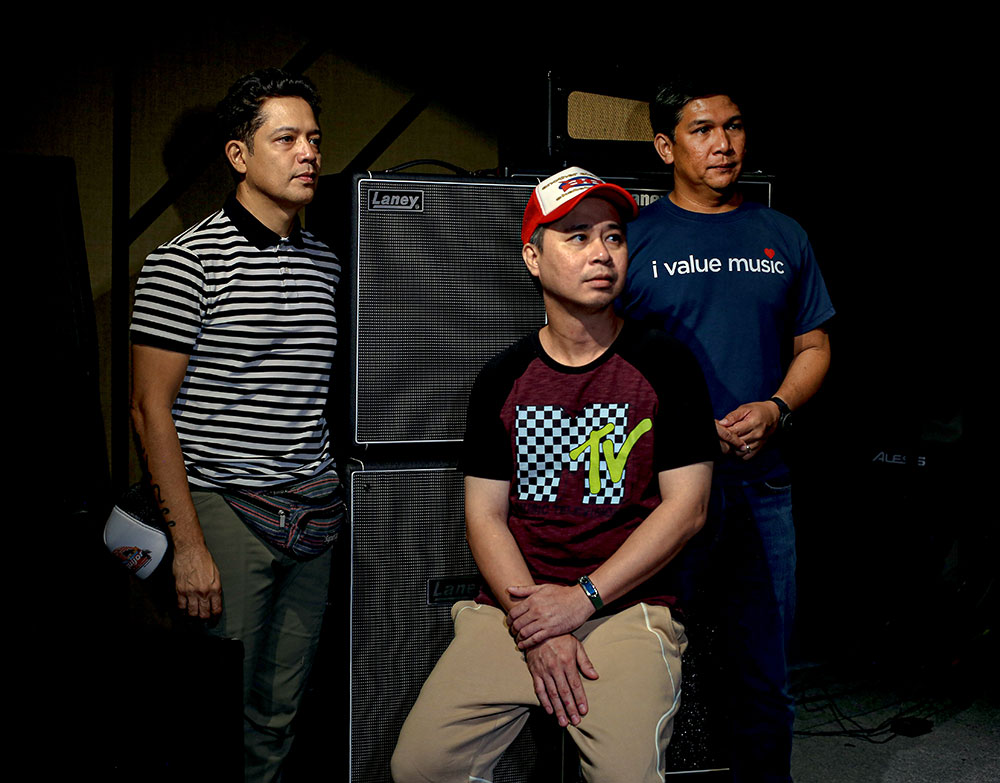
Rivermaya is iconic. The band has been together for nearly three decades and has produced 12 studio albums. They delivered us hit after hit that their songs became karaoke mainstays, afternoon show production numbers, battle of the bands covers, and much more. More importantly, they have successfully represented OPM not only locally but also globally. When asked how’s it like performing out of the country since they have their share of touring around Asia and other continents, they said that it’s not like being foreign acts at all since they perform mostly with a Pinoy crowd. “It’s exciting to perform at festivals because people expect to hear songs in different languages. When we do American tours, however, it is mostly the Filipino community that sees us. Although the American staff and security would tell us that they appreciated our music despite not understanding the lyrics,” says Mark.
Fresh from renewing their partnership with JB Music Philippines, I sat down with Rivermaya to get updates from the trio on their tenure in the industry, how they do music nowadays, and their participation at the Leni-Kiko rallies.
Did you expect to last this long doing music?
Mike Elgar: We probably didn’t expect to last this long, but it’s more about the current mood of things. We’re just happy that we’re all in the same mindset and still want to make music.
Mark Escueta: Being a musician might be challenging, but quitting is even more difficult. There are people who would have to shift careers out of necessity, which is tough. We have our challenges, but as long as there is a plan and we can still create new songs and love performing, it’s not that difficult to keep going.
How has the tenure in this industry changed you?
Mark: More time, more appreciation.
Nathan Azarcon: We couldn’t play while the pandemic was in full swing. I just kept practicing at home for nothing; we had no gigs, and it was the first time in our lives that we weren’t performing. Prior to this, even if you didn’t have your own band, you could do session work for others, but not this time! Now, I genuinely appreciate and enjoy what we have and what we’re doing as long as it continues process and it’s non-stop.
Mike: It’s basically about appreciating what we have and what we do. It’s easy to take the perks of being a musician for granted, but once you see how much people still love you, you’ll appreciate what your work has to offer.
What do you do as artists when you experience a creative slump?
Mark: What was difficult for me was the pandemic. That’s when I couldn’t and didn’t want to play. I can’t even look at my drums without thinking to myself, “Why should I practice? We don’t have any gigs.” But when I chose to practice playing the piano, I found a diversion; it’s one of my frustrations. It is still about music. Line-up changes and management issues were minor compared to the pandemic. For a long time, the pandemic robbed us of everything. It was also around this time that I discovered that I genuinely want this, that I love music and being in a band. You’d gradually take good energy from your co-artists and other individuals, since there were many who flourished during that tough time. You’d see that they can still make albums and find ways to perform, and you’d realize that it’s not the end of the world. Kapit lang. Eventually, the performances resumed, and we had a great time playing at the campaign. We had a lot of fun seeing so many people again. My attitude has shifted; whatever technical issues or hiccups we may have while traveling or performing our jobs, we can overcome them; just don’t give us another epidemic.
Nathan: Since the world is constantly shifting, there will be moments when you’re the lucky ones and times when you’re not. I eventually got used to it.
Mike: Fortunately, I haven’t experienced that yet because we face new experiences every day. Our world has also changed. We are all parents. When you’re feeling stuck, I believe you’re simply being lazy.
Has your process in creating songs changed? Has it been easier or more difficult?

Mike: I can say that we are more confused than ever about which option to use when producing tracks because there are so many. Before, you actually need to jam face to face, you must arrive at the studio prepared, if not, you will waste money. Now, online songwriting sessions are possible. We also do pre-prods.
Mark: We write and record even though the song is just partially written then we listen to it. When we released a song during the pandemic, we didn’t even saw each other at the studio at all, except when we’re going to mix the song already. It’s possible to do that now, a mix of all the possible process to create music.
Mike: It can be easier.
Do you see your kids doing music?
Mark: There are indications, definitely. My eldest son, Pele, was already singing before he could even speak. He was able to listen to music even while still in my wife’s womb. Jolina always allowed him listen to music through a speaker. I would sometimes get to the point where I would ask him to stop singing [laughs]. My youngest, Vika, is constantly singing a new tune. It’s so fun. I hope that they will be able to tell right away if they truly appreciate music and would enjoy having it as a part of their lives. If it’s something they’re interested in, we’ll definitely support them.
Nathan: My eldest is a gamer. I offered to buy him a guitar but he just said that he just wants to play (his game). With Octavia, she says she wants to be a model. Maybe in time, but then, bahala sila.
Mike: My eldest is really into music. She’s already been playing since high school. She writes songs. Now that she’s in collage, I asked her to lie low just to prioritize her education. She’s sings well, also knows how to play the guitar; she taught herself.
What are the characteristics of a high-quality musical instrument?
Mark: I believe it is the craftsmanship. Each element of the instrument is handcrafted with care. It’s clean or meticulously made. Durable materials were chosen.
Mike: Any musical instrument that can be and remains tuned. There are some instruments that, no matter what you do, cannot stay tuned for even a short period of time.
How did your partnership with JB Music Philippines got its start?
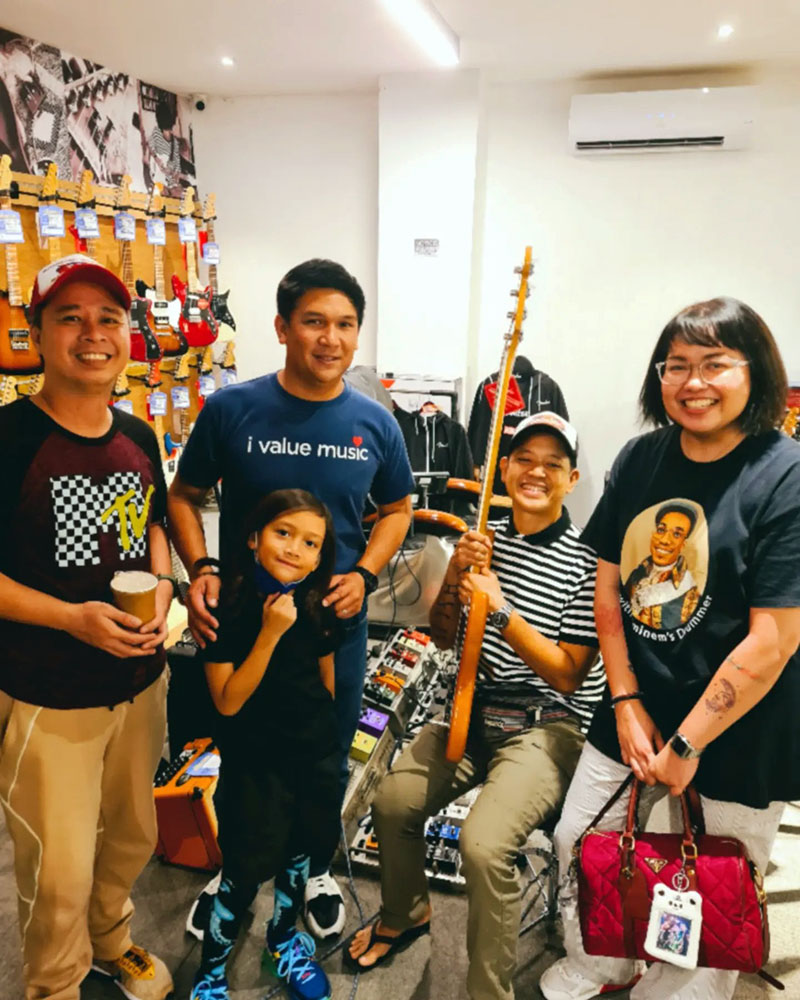
Mark: It started in 2003, they got me to endorse Zildjan cymbals and Gretsch drums. But when I was 11 years old, my parents gave me a Fernando drum set. I started out as a costumer, but now, I’m both an endorser and customer.
Mike: By 2006, JB Music got Rivermaya as one of their endorsers. Whatever line-up we have, they’re still there to support us. Back in 1989, I bought my first bandurria in Salonga Music Shop, I was part of a rondalla in school. I also bought my first acoustic guitar from them.
What kept the relationship with JB Music going?

Mike: It’s no longer just a business relationship, we’ve become friends with Jerico (Salonga). He’s the godfather of my child. It’s really a no brainer that we support each other. Even without the endorser, we still buy our instruments here.
What can we expect from you this year?
Mike: We’re working on some songs, but we’re prioritizing one. We release a song called “Casino” last year, and this up coming song would be the follow up. The pre-prod is almost done, after that, we’re going to finalize it then work on another song.
During the interview, I asked about their involvement in the rallies of former Vice President Leni Robredo. In this brief conversation, we discussed how it started and if they were actually compensated or not.
How it began
Mark: Our first rally performance was in Naga.
Nathan: There were a lot of people.
Mike: That was so fun!
Nathan: They asked for a number of musicians, but many declined because they were scared. But us, “Pak! Let’s do it.” “Laland trip kayo ha” “Hell yeah! Gawin natin yun.” Then when those musicians saw that, most of them who said “no” were like “we’re in!”
Mike: There were at least 20,000 who watched us in Naga.
Nathan: Towards the end, around 500 to 600 thousand people were at the rallies.
How often did they play?
Nathan: We would have a break every other day.
Mike: Towards the end, it became daily.
Paid or Not Paid
Rivermaya: Not paid
Mike: All of us, including the other artists at the rallies performed for free.
Mark: When we travel to distant places, we will be provided with transportation and accommodation.
Nathan: The team would already contact hotels that were sympathetic to the cause. The hotels would sometimes compete to see who could take us all in first. It’s as if it’s actually becoming a movement. We played in Zamboanga once, and cars couldn’t get to the top of the mountain. People would still trek up solely to attend the rally.





 Denise J. Mallabo
I miss seeing Nathan and Mark play with Mike Elgar.
LikeLike
Same, Jay, same.
LikeLike